How America is adapting to climate extremes
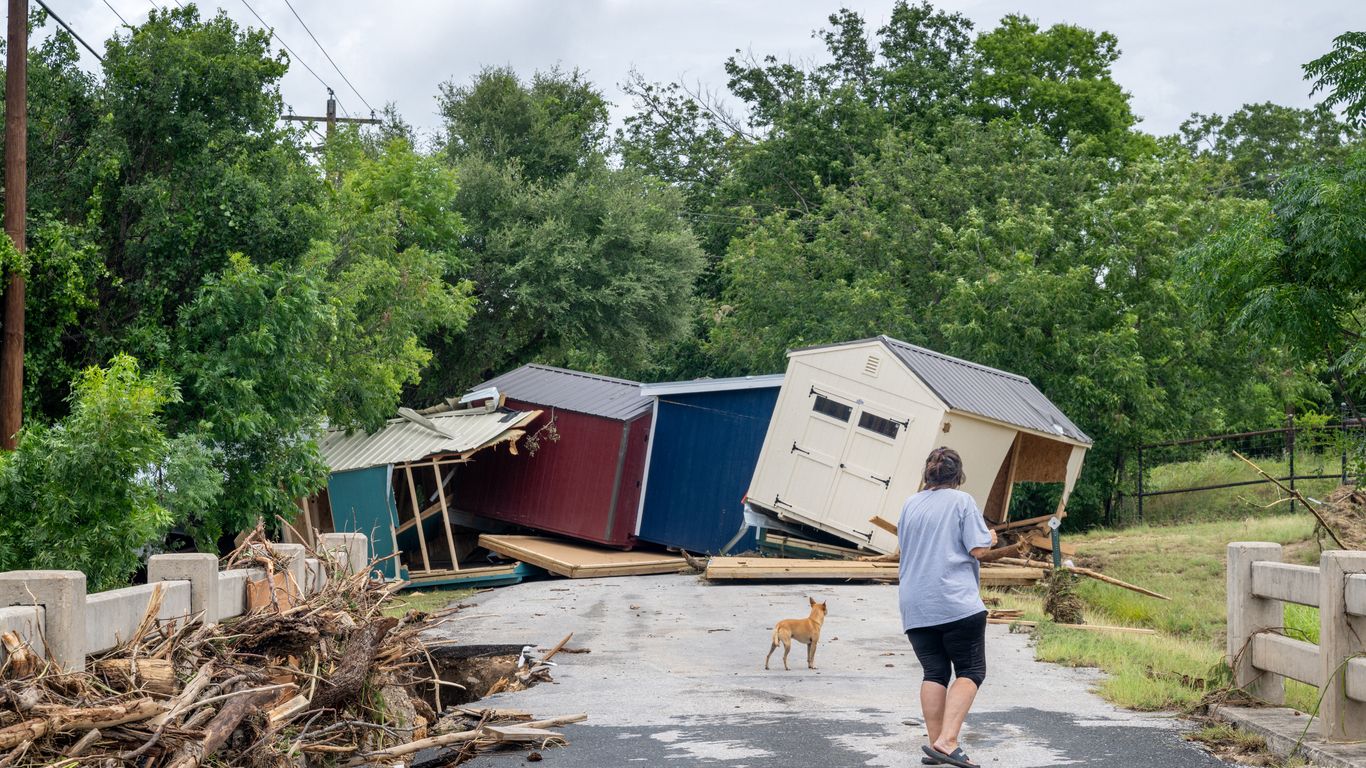
<p>Climate adaptation is increasingly moving from planning to real-world action as <a href="https://www.axios.com/energy-climate/extreme-weather" target="_blank">heat</a> waves, droughts, wildfires, floods and hurricanes test communities across the U.S.</p><p><strong>Why it matters:</strong> Even if greenhouse gas emissions decline, many communities are <a href="https://www.axios.com/2025/04/01/rainstorms-intense-climate-change" target="_blank">already facing</a> more frequent or intense <a href="https://www.axios.com/energy-climate/climate-change" target="_blank">climate</a> extremes, prompting officials to invest in infrastructure designed to reduce future damage.</p><hr><p><strong>Driving the news:</strong> After <a href="https://www.axios.com/2025/07/06/texas-floods-national-weather-service" target="_blank">catastrophic flooding</a> killed more than 130 people in Texas Hill Country last year, newly installed sirens were credited with warning residents during July's floods, which killed <a href="https://apnews.com/article/texas-floods-third-person-killed-d9375deb56732e862408f93c32fd095e" target="_blank">three</a> people but avoided a repeat of the 2025 disaster.</p><ul><li>It's an example of Republican-led states adapting after disaster, said Alice Hill, senior fellow for energy and the environment at the Council on Foreign Relations.</li><li>Texas expanded flood-<a href="https://abcnews4.com/news/nation-world/abbott-says-flood-warning-systems-saved-lives-signals-more-investment-next-legislation" target="_blank">warning</a> systems and floodplain <a href="https://www.kvue.com/article/news/state/texas-news/texas-flood/burnet-county-texas-july-floods-federal-buyout-millions-allocated/269-eb5e51d6-75b7-49b7-9c8a-6bd501debc1a" target="_blank">buyouts</a> after the Hill Country floods, while Houston strengthened building codes after <a href="https://www.axios.com/2017/12/15/timeline-the-days-after-harvey-and-katrina-struck-1513305218" target="_blank">Hurricane Harvey</a>.</li><li>"Building to the last disaster is like preparing for the last war," says Hill, who served as a senior resilience policy official on President Obama's National Security Council.</li></ul><p><strong>Between the lines: </strong>Hill said "almost all the infrastructure" in the U.S. "was built for a climate that essentially no longer exists."</p><ul><li>Mikhail Chester, director of the Metis Center for Infrastructure and Sustainable Engineering at Arizona State University, tells Axios that the infrastructure industry is learning that climate hazards "cost more to ignore than to actually start to design for" and that these risks "have become that much more real over the past decade."</li><li>However, Hill says adaptation is still running behind the scale of the challenge.</li></ul><p><strong>The big picture:</strong> Rather than rebuilding after every disaster, many states are redesigning infrastructure for the climate threats they face most — from hurricanes in the Southeast to droughts and wildfires in the West.</p><ul><li>Chester says insurers are helping shape adaptation by pricing climate risk into infrastructure decisions.</li><li>Hill says insurers have largely focused on limiting their exposure, with only a handful of programs rewarding resilience with lower premiums.</li></ul><p><strong>State of play: </strong>Since <a href="https://www.axios.com/2022/09/30/hurricane-ian-florida-death-toll" target="_blank">Hurricane Ian</a>, Florida has <a href="https://time.com/6225970/climate-proof-towns-extreme-weather/" target="_blank">invested</a> in backup power, stronger building codes and microgrids — small-scale power grids that supply electricity to local areas and can operate independently when the main electric grid fails.</p><ul><li>Louisiana utilities have hardened substations and strengthened the electric grid after repeated <a href="https://www.axios.com/2021/09/06/hurricane-ida-death-toll-rises-power-outage?ref=levernews.com" target="_blank">hurricanes</a>.</li><li>California has <a href="https://www.cpuc.ca.gov/industries-and-topics/electrical-energy/infrastructure/electric-reliability/undergrounding-program-description" target="_blank">expanded</a> wildfire-resistant building standards, underground power lines and drought <a href="https://geofluid.com/blogs/global-success-stories-how-singapore-namibia-and-california-are-leading-the-future-of-water-reuse/" target="_blank">measures</a> such as water recycling and groundwater recharge.</li><li>Los Angeles has <a href="https://19january2017snapshot.epa.gov/heat-islands/heat-island-cooling-strategies_.html" target="_blank">added</a> cool roofs and urban forestry, while Phoenix has <a href="https://www.gpec.org/blog/arizona-water-a-history-of-conservation-drip/" target="_blank">become</a> a national leader in <a href="https://19january2017snapshot.epa.gov/heat-islands/heat-island-cooling-strategies_.html" target="_blank">cooling</a> centers and other <a href="https://www.phoenix.gov/administration/departments/heat.html" target="_blank">heat</a>- and <a href="https://www.axios.com/local/phoenix/2026/02/18/colorado-river-basin-states-missed-deadline-federal-solution" target="_blank">drought-adaptation</a> measures.</li></ul><p><strong>Zoom in: </strong>Some communities are moving ahead despite federal funding constraints and the Trump administration's push to <a href="https://www.axios.com/2017/12/15/phrase-climate-change-scrubbed-from-nih-website-1513305064" target="_blank">scrub references</a> to climate change <a href="https://www.axios.com/2025/01/31/health-cdc-websites-data-removed-trump" target="_blank">from government websites</a>.</p><ul><li>One example is <a href="https://www.axios.com/2022/10/11/hurricane-ian-solar-power-off-grid" target="_blank">Babcock Ranch</a>, Florida, where a developer buried power lines, improved storm drainage, and built more wind-resistant homes. The community has since weathered four hurricanes with little damage, Hill says.</li><li>"We're seeing lots of exciting developments," Hill says. But she warns that "most of our infrastructure is not built for what is coming."</li></ul><p><strong>Zoom out: </strong>Professional engineering organizations are publishing climate-adaptation standards that states and local governments can adopt.</p><ul><li>Chester says engineers increasingly recognize the limits of relying solely on concrete channels and pipes, prompting greater use of parks, wetlands and other forms of green infrastructure.</li></ul><p><strong>The bottom line:</strong> Communities are showing climate adaptation can reduce damage and save lives. The bigger challenge is preparing for the next disaster — not simply rebuilding after the last one.</p><p><strong>Go deeper: </strong><a href="https://www.axios.com/local/san-antonio/2026/07/16/texas-hill-country-flooding-sirens-camps-safe" target="_blank">Sirens put to work as Texas Hill Country again slammed with floods</a></p>
<p>Climate adaptation is increasingly moving from planning to real-world action as <a href="https://www.axios.com/energy-climate/extreme-weather" target="_blank">heat</a> waves, droughts, wildfires, floods and hurricanes test communities across the U.S.</p><p><strong>Why it matters:</strong> Even if greenhouse gas emissions decline, many communities are <a href="https://www.axios.com/2025/04/01/rainstorms-intense-climate-change" target="_blank">already facing</a> more frequent or intense <a href="https://www.axios.com/energy-climate/climate-change" target="_blank">climate</a> extremes, prompting officials to invest in infrastructure designed to reduce future damage.</p><hr><p><strong>Driving the news:</strong> After <a href="https://www.axios.com/2025/07/06/texas-floods-national-weather-service" target="_blank">catastrophic flooding</a> killed more than 130 people in Texas Hill Country last year, newly installed sirens were credited with warning residents during July's floods, which killed <a href="https://apnews.com/article/texas-floods-third-person-killed-d9375deb56732e862408f93c32fd095e" target="_blank">three</a> people but avoided a repeat of the 2025 disaster.</p><ul><li>It's an example of Republican-led states adapting after disaster, said Alice Hill, senior fellow for energy and the environment at the Council on Foreign Relations.</li><li>Texas expanded flood-<a href="https://abcnews4.com/news/nation-world/abbott-says-flood-warning-systems-saved-lives-signals-more-investment-next-legislation" target="_blank">warning</a> systems and floodplain <a href="https://www.kvue.com/article/news/state/texas-news/texas-flood/burnet-county-texas-july-floods-federal-buyout-millions-allocated/269-eb5e51d6-75b7-49b7-9c8a-6bd501debc1a" target="_blank">buyouts</a> after the Hill Country floods, while Houston strengthened building codes after <a href="https://www.axios.com/2017/12/15/timeline-the-days-after-harvey-and-katrina-struck-1513305218" target="_blank">Hurricane Harvey</a>.</li><li>"Building to the last disaster is like preparing for the last war," says Hill, who served as a senior resilience policy official on President Obama's National Security Council.</li></ul><p><strong>Between the lines: </strong>Hill said "almost all the infrastructure" in the U.S. "was built for a climate that essentially no longer exists."</p><ul><li>Mikhail Chester, director of the Metis Center for Infrastructure and Sustainable Engineering at Arizona State University, tells Axios that the infrastructure industry is learning that climate hazards "cost more to ignore than to actually start to design for" and that these risks "have become that much more real over the past decade."</li><li>However, Hill says adaptation is still running behind the scale of the challenge.</li></ul><p><strong>The big picture:</strong> Rather than rebuilding after every disaster, many states are redesigning infrastructure for the climate threats they face most — from hurricanes in the Southeast to droughts and wildfires in the West.</p><ul><li>Chester says insurers are helping shape adaptation by pricing climate risk into infrastructure decisions.</li><li>Hill says insurers have largely focused on limiting their exposure, with only a handful of programs rewarding resilience with lower premiums.</li></ul><p><strong>State of play: </strong>Since <a href="https://www.axios.com/2022/09/30/hurricane-ian-florida-death-toll" target="_blank">Hurricane Ian</a>, Florida has <a href="https://time.com/6225970/climate-proof-towns-extreme-weather/" target="_blank">invested</a> in backup power, stronger building codes and microgrids — small-scale power grids that supply electricity to local areas and can operate independently when the main electric grid fails.</p><ul><li>Louisiana utilities have hardened substations and strengthened the electric grid after repeated <a href="https://www.axios.com/2021/09/06/hurricane-ida-death-toll-rises-power-outage?ref=levernews.com" target="_blank">hurricanes</a>.</li><li>California has <a href="https://www.cpuc.ca.gov/industries-and-topics/electrical-energy/infrastructure/electric-reliability/undergrounding-program-description" target="_blank">expanded</a> wildfire-resistant building standards, underground power lines and drought <a href="https://geofluid.com/blogs/global-success-stories-how-singapore-namibia-and-california-are-leading-the-future-of-water-reuse/" target="_blank">measures</a> such as water recycling and groundwater recharge.</li><li>Los Angeles has <a href="https://19january2017snapshot.epa.gov/heat-islands/heat-island-cooling-strategies_.html" target="_blank">added</a> cool roofs and urban forestry, while Phoenix has <a href="https://www.gpec.org/blog/arizona-water-a-history-of-conservation-drip/" target="_blank">become</a> a national leader in <a href="https://19january2017snapshot.epa.gov/heat-islands/heat-island-cooling-strategies_.html" target="_blank">cooling</a> centers and other <a href="https://www.phoenix.gov/administration/departments/heat.html" target="_blank">heat</a>- and <a href="https://www.axios.com/local/phoenix/2026/02/18/colorado-river-basin-states-missed-deadline-federal-solution" target="_blank">drought-adaptation</a> measures.</li></ul><p><strong>Zoom in: </strong>Some communities are moving ahead despite federal funding constraints and the Trump administration's push to <a href="https://www.axios.com/2017/12/15/phrase-climate-change-scrubbed-from-nih-website-1513305064" target="_blank">scrub references</a> to climate change <a href="https://www.axios.com/2025/01/31/health-cdc-websites-data-removed-trump" target="_blank">from government websites</a>.</p><ul><li>One example is <a href="https://www.axios.com/2022/10/11/hurricane-ian-solar-power-off-grid" target="_blank">Babcock Ranch</a>, Florida, where a developer buried power lines, improved storm drainage, and built more wind-resistant homes. The community has since weathered four hurricanes with little damage, Hill says.</li><li>"We're seeing lots of exciting developments," Hill says. But she warns that "most of our infrastructure is not built for what is coming."</li></ul><p><strong>Zoom out: </strong>Professional engineering organizations are publishing climate-adaptation standards that states and local governments can adopt.</p><ul><li>Chester says engineers increasingly recognize the limits of relying solely on concrete channels and pipes, prompting greater use of parks, wetlands and other forms of green infrastructure.</li></ul><p><strong>The bottom line:</strong> Communities are showing climate adaptation can reduce damage and save lives. The bigger challenge is preparing for the next disaster — not simply rebuilding after the last one.</p><p><strong>Go deeper: </strong><a href="https://www.axios.com/local/san-antonio/2026/07/16/texas-hill-country-flooding-sirens-camps-safe" target="_blank">Sirens put to work as Texas Hill Country again slammed with floods</a></p>
FOMOGRAM SENTINEL GRAVITY TELEMETRY
General news unrelated to monitored cryptocurrencies.
Explore all verified news, research, and global sources for CRYPTO.