Copper's $6.70 Rebound: Warehouse Crunch Spurs Inflows
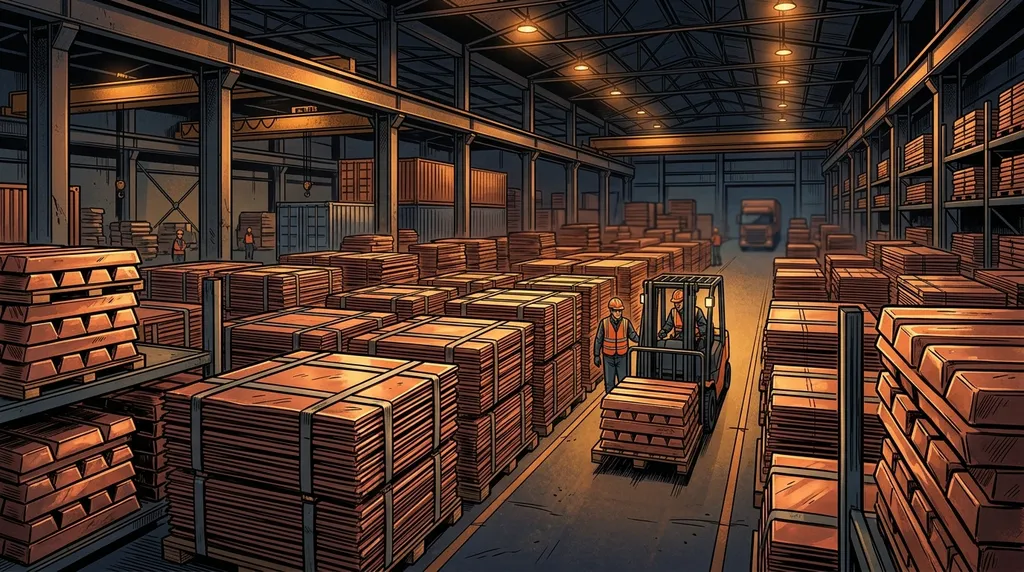
Cascading physical supply constraints pushed COMEX copper futures back toward $6.77 per pound on September 21 as United States commercial warehouses neared operational capacity limits, forcing industrial traders and smelters to accelerate spot delivery contracts ahead of expected 100,000-tonne autumn import arrivals.
US Commercial Depots Approach Critical Capacity Limits
Surging shipments of refined red metal have overwhelmed key logistical hubs across the American Midwest and Gulf Coast, pushing bonded storage facilities near maximum operational thresholds. Commercial depot operators report that available square footage for bulk cathode pallet storage has dwindled to single-digit percentages, directly colliding with a massive inbound pipeline of maritime cargo. With domestic fabricators maintaining robust baseline procurement orders, the physical bottleneck has created immediate logistical friction for spot market participants.
The capacity bottleneck is further exacerbated by logistical delays across secondary distribution channels. Rather than signaling an oversupplied domestic market, the localized depot gridlock stems from an intense front-running maneuver by industrial buyers seeking to secure certified non-sanctioned grade-A cathodes ahead of anticipated fourth-quarter freight tariffs and maritime route surcharges.
Shanghai Spot Premiums Surge to Four-Year Highs
Across the Pacific, physical demand indicators in mainland China have decoupled sharply from macroeconomic pessimism. Shanghai bonded warehouse delivery premiums jumped to their highest levels in forty-eight months, reflecting an urgent domestic scramble for cathode imports following an aggressive drawdown in regional smelter inventories. Chinese state-backed infrastructure programs and electric vehicle manufacturing plants have maintained relentless baseline consumption, absorbing domestic refined stock faster than local smelters can process blister feedstock.
This Asian demand pulse has widened the arbitrage window between Western and Eastern pricing centers. International trading houses have actively redirected seaborne vessels toward Asian deepwater ports to capture lucrative spot differentials, creating an unexpected supply vacuum that prevents European and North American stockpiles from replenishing normal operational buffers.
London Metal Exchange Flips Back into Backwardation
Futures term structures across global commodity exchanges have swiftly recalibrated to reflect immediate physical tightness. On the London Metal Exchange, the cash-to-three-month spread abruptly inverted back into backwardation, an unmistakable market signal that traders and institutional end-users are willing to pay a substantial premium for immediate physical delivery over deferred futures paper.
When futures curves compress into backwardation, it places massive financial strain on commercial short-sellers who rely on cheap financing to roll positions forward. Commercial hedge funds and CTA trend-followers holding short hedges have begun buying back spot-month contracts to neutralize widening carry costs, injecting explosive buying volume into daily closing auctions and defending the critical $6.70 benchmark.
Refined Supply Crunch Meets Clean Energy Grid Demand
The fundamental backdrop for industrial metals remains dominated by sovereign infrastructure upgrades, artificial intelligence data center grid buildouts, and electric transport transition mandates. Global copper extraction continues to battle declining ore grades in premier Chilean and Peruvian open-pit complexes, while geopolitical disruptions in African transport corridors further delay high-grade concentrate shipments to coastal export hubs.
With operational warehouse space constrained in the West, physical premiums hitting multi-year records in the East, and global exchange inventories sitting at precarious historical depths, any minor operational hiccup at major mining concessions threatens to trigger violent upside repricing. As long as COMEX front-month contracts sustain support above the pivotal $6.70 floor, institutional capital remains primed to treat micro-pullbacks as strategic accumulation phases.
FOMOGRAM SENTINEL GRAVITY TELEMETRY
Warehouse storage constraints in the US combined with four-year high Shanghai import premiums confirm acute physical copper scarcity, turning spot dips into institutional accumulation opportunities.
Track live candlestick charts, quantitative telemetry, and active signals for COPPER in Terminal Overview.